
SN6501DBVR
The SN6501 is a center-tapped transformer driver that powers isolated supplies by driving a small transformer from a 1.6-V to 5.5-V supply at up to about 410 kHz, delivering up to 1.5 W. It operates from -40°C to +125°C and is typically paired with a rectifier/regulator to create low-noise isolated bias rails for CAN, RS-485 and gate-drive applications.
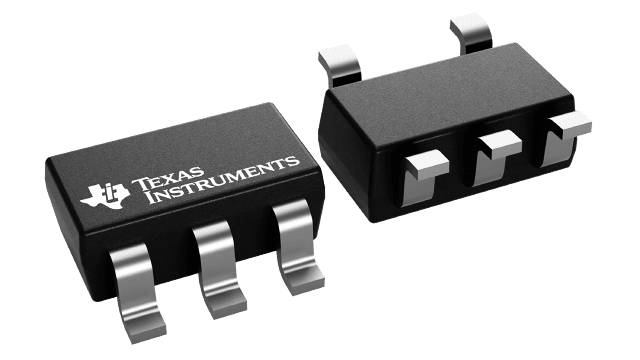
- Package
- SOT-23-5
Product overview
The SN6501 is a center-tapped transformer driver that powers isolated supplies by driving a small transformer from a 1.6-V to 5.5-V supply at up to about 410 kHz, delivering up to 1.5 W. It operates from -40°C to +125°C and is typically paired with a rectifier/regulator to create low-noise isolated bias rails for CAN, RS-485 and gate-drive applications.
- Manufacturer
- TI
- Part number
- SN6501DBVR
- Category
- Isolation Devices
- Package
- SOT-23-5
- Packaging
- Tape & Reel
- Condition
- New & Original
- Compliance
- RoHS Compliant
- Lifecycle
- Confirm with manufacturer
- Lead time / MOQ
- Confirm with quotation
Technical parameters
18 parametersConstruction
- PTOT Continuous power dissipation
- 250 mW
- Human body model (HBM), per ANSI/ESDA/JEDEC JS-001, all
- 4
- Machine Model JEDEC JESD22-A115-A
- 200 V
- VCC = 5 V ± 10%, When connected to Transformer with
- 11
- VCC = 3.3 V ± 10% primary winding Center-tapped
- 7.2
- VCC = 5 V ± 10% see Figure 5-32 for typical
- 350
- VCC = 3.3 V ± 10% see Figure 5-31 for typical
- 150
- VCC = 3.3 V ± 10%, See Figure 6-4
- 1
- VCC = 5 V ± 10%, See Figure 6-4
- 0.6
- VCC = 3.3 V ± 10%, no load
- 150
- VCC = 5 V ± 10%, no load
- 300
- fST Startup frequency VCC = 2.4 V, See Figure 6-4
- 300 kHz
Performance
- VCC Supply voltage
- 6 V
- VD1, VD2 Output switch voltage
- 14 V
- ID1P, ID2P Peak output switch current
- 500 mA
- TJ Junction temperature
- 170 °C
- Tstg Storage temperature range
- 150 °C
- TA Ambient temperature
- 125 °C
Specifications & documentation
Use the official manufacturer documentation to verify electrical characteristics, package dimensions and operating limits before design approval.
Frequently asked questions
Common pre-quotation questions and selection notes to help you verify key parameters and sourcing before requesting a quote.
How do I verify the part is genuine / avoid counterfeit?
Buy only from authorized or franchised channels. On receipt, check: (1) laser-etched markings that solvent will not remove; (2) batch / lot code consistent between label and device; (3) original reel or tube packaging; (4) request traceability documents (CoC, date code). For critical parts, third-party X-ray / decapsulation testing is recommended.
How do I read the markings / date code on a chip?
Most active ICs use a 4-digit date code YYWW (year + week, e.g. 2345 = 2023 week 45). The top mark is manufacturer logo + base part number + lot code. For SMD code lookup, search by "marking code + package" on AllDataSheet / Octopart / LCSC.
What does the package code mean (TO-220, SOT-23, QFP…)?
Package codes describe the physical form factor and pin layout — critical when sourcing, because electrically equivalent parts in different packages will not fit the PCB. Common: TO-220 (3-terminal power), SOT-23 (3-pin small signal), DIP / SOIC (through-hole / SMD ICs), QFP / QFN (MCUs, processors).
What if my original model is discontinued (EOL / NRND)?
Three options: (1) the manufacturer’s recommended replacement; (2) franchised distributor legacy stock; (3) a functionally compatible cross-brand part — provided pinout and key parameters match. Always evaluate on a real board before mass swap.
What is the minimum order quantity (MOQ) and lead time?
We support both sample and volume orders. Minimum order quantity, stock availability and lead time are confirmed per inquiry — tell us your model and quantity and we will quote. Sample quantities for design validation are supported.
Can I get the datasheet and samples?
The full datasheet is linked on this page. For parts without a direct datasheet, we can locate the manufacturer document on request. Sample requests are supported — contact us with your model and quantity.
Request confirmation of current stock, date code, packaging, price and delivery terms. Product information does not constitute a binding offer; final specifications are confirmed with your quotation.